The Renovation-Free Flip: How Buyers Are Using AI Remodeling Previews to Justify Offers on Ugly Kitchens
There's a specific moment every real estate agent dreads. The buyers walk into an otherwise solid house, good bones, right neighborhood, right price, and then they hit the kitchen. Dated cabinets. Laminate counters. Fluorescent lighting from 1994. The energy in the room shifts. The conversation goes quiet. The showing ends politely, and the agent already knows what the feedback call is going to sound like.
That moment still happens. But what happens after it has changed.
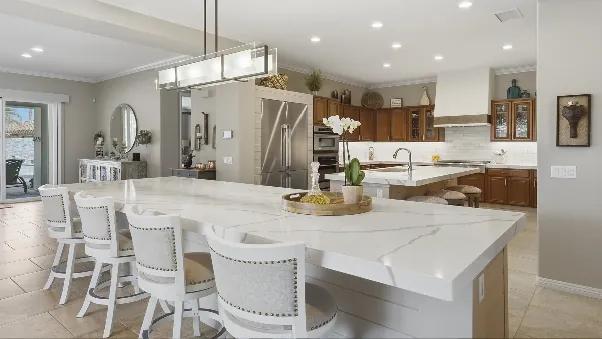
Buyers who would have walked away from that kitchen two years ago are now pulling out their phones, opening a virtual remodeling real estate tool, and previewing what the space looks like with new cabinets, quartz countertops, and recessed lighting before they've even left the driveway. By the time they get home, they're not thinking about the kitchen that was there. They're thinking about the kitchen they could have.
That shift from "this needs too much work" to "I can see exactly what I'd do with it" is changing offer behavior in ways the market hasn't fully processed yet.
Why Kitchens Specifically
Kitchens have always been disproportionately influential in buying decisions. Studies on buyer behavior have consistently shown that kitchen condition affects perceived value more than almost any other single feature, more than bathroom finishes, more than flooring, more than curb appeal.
The reason is emotional. Buyers don't evaluate a kitchen the way they evaluate a roof. A roof is infrastructure. A kitchen is where they picture their life happening. A bad kitchen doesn't just lower the appraisal in a buyer's mind; it makes the whole house feel wrong.
Virtual remodeling real estate tools work precisely because they operate at that emotional level. They don't just show a different kitchen. They show the buyer's kitchen, the one they'd choose, in the style they'd pick, in the house they're already standing in. The cognitive distance between "this house needs work" and "this house could be exactly what I want" collapses when you can see the after before you've committed to anything.
How Buyers Are Actually Using It
The use pattern we're seeing isn't buyers commissioning elaborate renderings before making an offer. It's faster and more casual than that.
A buyer sees a listing with a difficult kitchen. Instead of dismissing it, they use a virtual remodeling real estate preview either through a tool linked in the listing or through something their agent provides to generate a quick visual of the renovated space. It takes minutes. The result doesn't have to be architect-grade. It just has to be convincing enough to shift the emotional register from "this is a problem" to "this is a project."
That shift is enough to get them back for a second showing. And a second showing is usually what leads to an offer.
Agents who've started incorporating virtual remodeling real estate previews into their listing strategy, particularly for properties with cosmetically challenged kitchens, dated bathrooms, or worn interiors are reporting fewer cold exits and more follow-up inquiries. The listing doesn't need to be perfect. It needs to show buyers what perfect could look like.
What This Means for Listing Photography
Here's where it gets directly relevant for photographers.
The listing photos set the emotional baseline. If the kitchen photos look clinical, flat light, no atmosphere, every flaw visible at full resolution, the virtual remodeling preview is fighting uphill. It's trying to overcome a negative first impression rather than build on a neutral or positive one.
The best workflow pairs strong core editing with virtual remodeling real estate assets. A properly edited HDR kitchen photo, good white balance, masked windows, corrected perspective, no camera reflections, gives the virtual remodeling preview a solid foundation to work from. The AI rendering is matching into a well-lit, properly composed space rather than trying to rehabilitate a poorly edited one.
At AutoHDR, the core edit is always where we start. Window masking, white balance correction, straightening, reflection removal: these aren't cosmetic steps. They're what makes every downstream asset, including virtual remodeling previews, look like it belongs in the same listing rather than grafted onto it.
The Offer Math That's Changing
There's a practical financial argument here that agents and sellers are starting to understand.
A home with a dated kitchen that scares buyers away either sits longer, sells below ask, or gets pulled. The seller's options are: renovate before listing (expensive, time-consuming), price down to compensate (leaves money on the table), or find a way to help buyers see past it.
Virtual remodeling real estate previews are the third option. They cost a fraction of an actual renovation, attach directly to the listing, and help buyers do the imaginative work that converts interest into offers. For sellers who can't afford to renovate and don't want to give the house away, it's the most cost-effective tool available.
For photographers, that creates a clear upsell conversation. You're not selling a rendering, you're solving a listing problem. The agent already knows the kitchen is going to be an objection. You're showing up with a tool that handles that objection before it kills the deal.
The Limits Worth Knowing
Virtual remodeling real estate previews are a persuasion tool, not a deception one. The listings using them well are always clear that the images represent a potential renovation, not the current condition. That disclosure is both the ethical standard and, in most markets, the legal one.
What they can't do is make a structurally compromised property look like a sound investment. Buyers who get past the kitchen and into an inspection are going to find what's actually there. The virtual remodeling preview earns the second look, it doesn't replace due diligence.
Used correctly, it's one of the most honest tools in the listing toolkit. It's saying: here's what this house could be, clearly labeled as a possibility rather than a promise.
The Ugly Kitchen Isn't the End of the Conversation
It used to be. The buyer walked in, saw the laminate, did the mental math on a renovation they didn't want to manage, and moved on. The seller dropped the price. The agent started over.
That sequence is breaking down because buyers now have a way to fast-forward past the objection and see the outcome. Virtual remodeling real estate tools didn't create that desire; buyers always wanted to visualize potential. The tools just finally made it fast enough and convincing enough to change behavior.
The listings that use them well aren't hiding problems. They're answering the question buyers were always asking: what could this be? before the buyer has to ask it out loud.
That's not a trick. That's just a good listing strategy. And we'd rather your photos be the foundation it's built on.
FAQs
What is virtual remodeling in real estate?
Virtual remodeling in real estate uses AI-powered technology to digitally update rooms in listing photos. Features such as cabinets, countertops, flooring, lighting, paint colors and fixtures can be changed virtually, helping buyers visualize a property's potential without physical renovations.
How does virtual remodeling help sell homes with outdated kitchens?
Virtual remodeling real estate tools allow buyers to see what an outdated kitchen could look like after renovations. By showing realistic design possibilities, these previews help buyers focus on a property's potential rather than its current cosmetic limitations which can encourage additional showings and stronger offers.
Is virtual remodeling the same as virtual staging?
No. Virtual staging adds furniture and décor to an empty room, while virtual remodeling changes permanent features of the property itself, such as cabinets, flooring, walls, countertops, lighting or fixtures. Virtual remodeling is typically used to showcase renovation possibilities rather than furnishing options.
Are virtual remodeling images required to be disclosed in listings?
Yes. Virtual remodeling images should be clearly labeled as digitally enhanced representations of potential renovations rather than the property's current condition. Proper disclosure helps maintain transparency and ensures buyers understand what changes are conceptual rather than existing.
Can virtual remodeling increase buyer interest in fixer-upper properties?
Yes. Virtual remodeling real estate previews can help buyers visualize how a dated or cosmetically challenged property could look after updates. This reduces uncertainty, makes renovation possibilities easier to understand and can generate more interest in homes that might otherwise be overlooked.