Dead Grass Killed the Deal: What Drought Seasons Are Doing to Listing Photography (And How AI Fixed It)
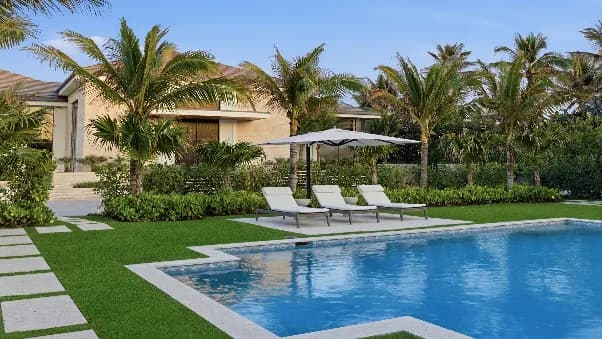
There is a specific kind of frustration that comes from shooting a genuinely good listing and knowing the front yard is going to be the thing buyers remember.
The house is clean. The interior is well-lit. The agent is happy with everything from the entryway to the primary suite. Then you walk outside for the exterior shot and the lawn looks like it hasn't seen rain since March. Patchy. Yellow in some spots, brown in others. The kind of grass that makes a $600,000 home look like it's been abandoned.
You shoot it anyway because that's the job. But you already know what the listing is going to look like when it goes live.
This isn't a rare edge case anymore. Drought conditions across the Sun Belt, the Southwest, and increasingly the Pacific Northwest made dead and damaged lawns one of the most consistent listing problems of 2025. Photographers were dealing with it on shoot after shoot. And the traditional fix, hoping the agent waters aggressively before the shoot, or shooting tight enough to avoid the lawn entirely, stopped being good enough.
AI grass replacement became a practical solution, not a novelty. Here's why it matters more than most photographers are giving it credit for.
What Drought Actually Did to Listing Photography in 2025
The numbers on drought coverage in 2025 were significant. Large portions of Texas, Arizona, California, and Nevada spent the majority of the year under moderate to severe drought conditions. In markets like Phoenix, Dallas, and Sacramento, three of the most active real estate markets in the country, dead or dormant lawns became the norm, not the exception.
For listing photography, that created a compounding problem. It wasn't just that individual properties had bad lawns. It was that entire neighborhoods looked the same, street after street of yellowed grass, cracked soil, and landscaping that was clearly struggling. Photos that would have looked strong in a wetter year looked tired.
Buyers scrolling listing feeds in those markets started filtering unconsciously. A brown lawn read as neglect, even when the home itself was in excellent condition. Sellers who had maintained everything inside the house were losing curb appeal points for something entirely outside their control.
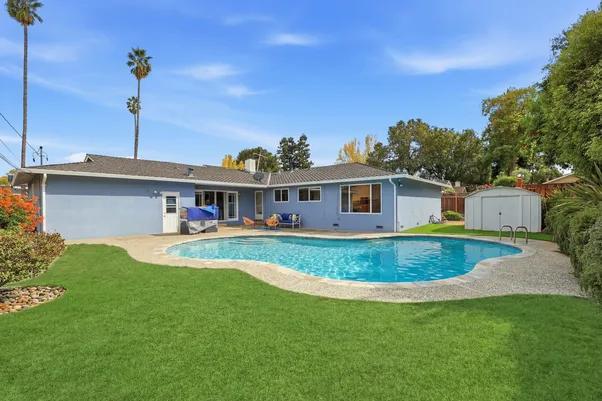
AI grass replacement addressed that directly. Replace the dead lawn with a clean, natural-looking green, and the photo reads the way the agent and seller need it to as a well-maintained property, not a casualty of a dry year.
What Good AI Grass Replacement Looks Like
The word "replacement" undersells what the edit actually does when it's done right. It isn't a green filter dropped over the lawn. It's a contextually aware edit that accounts for the lighting conditions of the shot, the shadows falling across the grass from trees and structures, the texture of the ground beneath, and the relationship between the lawn and everything surrounding it.
Bad AI grass replacement looks fake in a specific way. The green is too uniform. Shadows that fall across a dead lawn don't fall across the replaced one. The transition between the grass edge and a driveway or sidewalk looks cut rather than grown. Buyers can't always articulate what's wrong, but they feel it, the image doesn't quite hold together.
Good AI grass replacement is invisible. The viewer never thinks about the grass because it looks exactly like grass is supposed to look in that light, at that time of day, with those shadows. The edit earns its place by disappearing into the photo.
At AutoHDR, grass greening is processed with the same attention to ambient light and shadow consistency that we apply to sky replacements and window masking. The goal is always a result that reads as real, not a result that reads as edited.
The Disclosure Question
Any conversation about AI grass replacement in listing photography eventually arrives here, and it's worth addressing directly.
The ethical standard is consistent with every other AI edit in real estate photography, the modification has to represent a realistic condition of the property, not a misrepresentation of it. Replacing dead drought-season grass with healthy green grass is not the same as adding a pool that doesn't exist or removing a power line that crosses the property line.
Grass grows back. In most markets, the lawn would look perfectly normal in a different season or after adequate rainfall. The AI grass replacement is showing the property under normal conditions rather than peak-drought conditions. That's a meaningful distinction.
Most U.S. markets don't require specific disclosure for grass enhancement as long as the edit doesn't misrepresent a permanent feature of the property. That said, norms vary and agents should know what their MLS guidelines require. The photographers and agents using AI grass replacement responsibly are the ones making those calls with full awareness, not just applying it reflexively to every exterior.
When It Solves the Problem and When It Doesn't
AI grass replacement works best on front and back lawns where the grass is the primary ground cover and the damage is drought or dormancy-related. Patchy yellow lawns, brown seasonal grass, and sun-scorched turf are all strong candidates.
It works less well on lawns with complex structural problems, deep ruts, significant erosion, or areas where the soil itself is visibly exposed across large sections. The edit replaces color and texture, but it can't reconstruct a lawn that's fundamentally missing.
It also requires a reasonably clean exterior edit underneath. If the base photo has significant lens distortion, a horizon that's off, or exposure issues that make the property look dark and flat, the grass replacement will sit on top of those problems rather than solve them. The core edit has to be right first. AI grass replacement is an enhancement layer, not a correction layer.
This is the same principle we apply across every add-on in the AutoHDR pipeline. The core editing (HDR merging, white balance, window masking, perspective correction) has to be solid before any enhancement makes sense. Grass greening, virtual twilight, virtual staging, all of them perform better when the foundation is clean.
What Photographers Are Gaining by Offering It
For photographers in drought-affected markets, AI grass replacement is an upsell that closes itself. The agent can see the problem with their own eyes on shoot day. You don't have to explain why the lawn looks bad, they already know. The conversation is just: do you want this fixed in the edit, or do you want buyers to see it the way it looks right now?
That's an easy yes. And it's a line item that adds meaningful revenue per shoot without adding time on-site.
For photographers working in markets where drought is seasonal rather than chronic, it's a tool worth having ready for the right conditions. The Sun Belt summers, the dry fall seasons in the West, the late-spring dead patches that appear before the first round of summer rain, these are predictable windows where AI grass replacement is going to come up in agent conversations whether you offer it or not.
Better to be the photographer who already has the answer.
The Lawn Isn't the Listing, But It's the First Thing Buyers See.
Dead grass doesn't kill deals because buyers are irrational. It kills them because first impressions do real damage and they're hard to recover from. A buyer who forms a "neglected" impression from the cover photo is reading the entire listing through that lens, looking for other problems, more skeptical of everything they see inside.
AI grass replacement doesn't just fix the lawn. It protects the rest of the listing from carrying the weight of a bad cover impression. That's the actual value of the edit, and it's why photographers in drought markets are adding it to their standard workflow rather than treating it as an occasional request.
We built grass greening into AutoHDR because we shoot in the same markets our clients do. We know what a Texas summer does to a front yard. The edit exists because the problem is real, it's recurring, and it has a clean solution.
The lawn is fixable. The deal doesn't have to die with the grass.
FAQs
What is AI grass replacement in real estate photography?
AI grass replacement is a photo editing technique that transforms brown, patchy, or drought-damaged lawns into healthy-looking green grass. It uses artificial intelligence to preserve natural textures, shadows and lighting so the lawn appears realistic within the property's exterior photos.
Why do real estate photographers use AI grass replacement?
Drought conditions, seasonal dormancy, and poor lawn maintenance can negatively affect curb appeal in listing photos. AI grass replacement helps improve the appearance of exterior images, allowing buyers to focus on the property's features rather than damaged landscaping.
Does AI grass replacement look realistic?
When done correctly, AI grass replacement blends naturally with the existing lighting, shadows, and surrounding landscape. The best edits preserve texture and color variation, making the lawn look healthy without appearing artificially bright or overly uniform.
Can AI grass replacement be used on every lawn?
AI grass replacement works best on lawns that are brown, yellow, patchy or seasonally dormant. However, it may be less effective on properties with severe erosion, large areas of exposed soil or significant landscaping damage that extends beyond simple grass discoloration.
Is AI grass replacement allowed in real estate listings?
In many markets, AI grass replacement is considered an acceptable enhancement because it improves the appearance of a temporary landscape condition rather than altering a permanent property feature. However, photographers and agents should always follow local MLS guidelines and disclosure requirements when using edited images.