Floor Plans Are the New Hero Shot: Why Buyers Under 35 Swipe Past Photos and Straight to the Layout
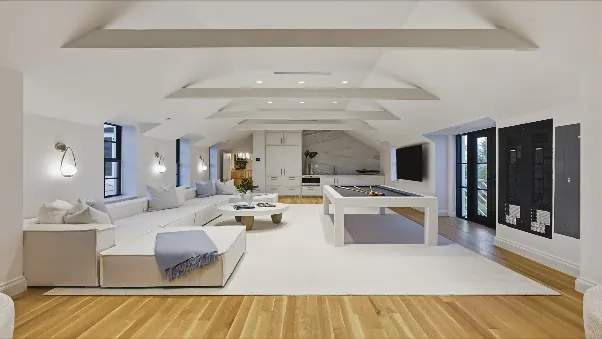
A photographer spends forty minutes getting the living room exactly right. Perfect light. Clean white balance. Straight lines. The kind of wide-angle shot that makes a 14-foot ceiling look like it belongs in an editorial spread. The agent loves it. It goes up as the cover photo.
And the first thing a 28-year-old buyer does when they open the listing is swipe past it.
Not because the photo is bad. Because they already know what living rooms look like. What they don't know, and what they can't figure out from a gallery of beautifully edited rooms, is how the house is actually laid out. Where the primary bedroom sits relative to the kitchen. Whether there's a wall between the living room and the dining area or an open pass-through. How the traffic flows from the front door to the back of the house.
That spatial logic is what floor plans answer. And for a growing segment of buyers, it's the first question they're asking before the photos, before the description, sometimes before the price.
We're watching this behavior show up consistently across the listings processed through AutoHDR. Here's what's driving it and what it means for photographers building their service packages.
Why Younger Buyers Think Spatially First
There's a generational context worth understanding here. Buyers under 35 grew up with spatial interfaces as a normal part of daily life. Video games. Google Maps. 3D navigation in everything from furniture shopping apps to city planning tools. They are comfortable reading a floor plan the way an older buyer reads a street address, fluently, quickly, and with immediate comprehension.
For this group, a gallery of photos answers a different question than the one they're actually asking. Photos tell them what a house looks like. A floor plan tells them whether the house works. Those are not the same question, and the floor plan answer comes first.
The data backs this up. Zillow's buyer research consistently ranks floor plan availability as one of the top features buyers want in a listing and the preference is significantly stronger in the under-40 demographic. Listings that include a floor plan alongside photos see higher engagement, longer time on page, and more save-to-favorites actions than comparable listings without one.
The floor plan isn't supplementary information anymore. For a significant portion of the active buyer pool, it's the primary filter.
What a Floor Plan Actually Communicates
It's worth being specific about what buyers are looking for when they go to the floor plan, because it informs how photographers should think about delivering one.
Room adjacency is the first thing. A primary bedroom next to a secondary bedroom reads differently than a primary bedroom on the opposite end of the house, and that difference matters enormously depending on whether the buyer has young children or wants distance from a home office. The floor plan answers that question in two seconds. Twenty photos of those rooms don't.
Traffic flow is the second. A buyer trying to understand whether an open-plan layout actually feels open, or whether the kitchen island creates a bottleneck, needs to see how the spaces connect. The floor plan makes that legible. Photos of individual rooms, no matter how well edited, don't convey flow.
Square footage distribution is the third. A 2,400-square-foot house where the garage takes up 600 square feet reads very differently than a 2,400-square-foot house where that space is the living area. A floor plan app for real estate that accurately captures dimensions gives buyers a truthful picture of where the space actually goes, something that listing descriptions routinely obscure and photos can't convey at all.
The Photography Connection That Most Photographers Miss
Here's the part that doesn't get discussed enough in photography circles.
Floor plans and listing photos are answering different questions, but they're read as part of the same package. A buyer who pulls up a floor plan app for real estate alongside a listing's photo gallery is trying to reconcile what they see in the rooms with how those rooms connect. If the photos are strong and the floor plan is accurate, that reconciliation happens smoothly and the buyer's confidence in the listing increases.
If the photos are strong and the floor plan is missing, the buyer is left doing spatial reconstruction from a gallery, working harder to understand something that should be immediately legible. That cognitive friction doesn't always kill interest, but it creates doubt. And doubt, in a competitive market where buyers are moving fast, often just moves them to the next listing.
Photographers who deliver a floor plan alongside edited photos are removing that friction entirely. The package answers both questions: what it looks like and how it's laid out, in a single delivery. That's a more complete product, and agents increasingly recognize it as one.
What a Floor Plan App for Real Estate Needs to Do Well
Not all floor plan tools produce equally useful results, and photographers shopping for one worth adding to their workflow should know what to evaluate.
Accuracy matters more than style. A floor plan that looks clean but has room dimensions off by fifteen percent is worse than a rough sketch with accurate measurements, because buyers make decisions based on those numbers. A floor plan app for real estate that uses laser measurement, LiDAR, or structured light scanning produces more reliable dimensions than one that relies on manual input or camera estimation.
Turnaround has to match the photo workflow. A floor plan that takes 48 hours to generate creates the same delivery bottleneck problem as a slow photo editor. The floor plan app for real estate that integrates into a same-day delivery workflow is the one worth building into a service package.
The output format has to work across platforms. MLS portals, listing websites, and social posts all use floor plans differently. A floor plan app for real estate that outputs clean, high-resolution images in multiple aspect ratios (not just a PDF that agents have to reformat) is the one that actually gets used instead of sitting in the delivery folder unopened.
At AutoHDR, we process the photo side of the delivery package. Floor plan tools that sync with the same scheduling and delivery integrations, HDPhotoHub, Aryeo, Spiro, Tonomo, drop into the same workflow without adding a separate step. Same shoot, same delivery timeline, complete package.
The Upsell That Doesn't Feel Like an Upsell
For photographers, floor plans represent one of the cleanest service additions available because the demand already exists and agents know it.
The conversation isn't "would you like to add a floor plan?" in the same way you'd pitch virtual staging or aerial photography. Most agents already know they should be including floor plans. The question is whether the photographer makes it easy enough to be the person who provides it.
A photographer who shows up with an edited photo package, a virtual tour, and an accurate floor plan, all delivered same-day through the platforms the agent already uses has removed every logistical reason an agent would go somewhere else. The service isn't just better. It's easier to work with. That combination is what builds accounts that don't leave.
The Photo Still Matters: The Floor Plan Makes It Work Harder
Nothing here is an argument against great listing photography. A well-edited photo is still what stops the scroll, creates the emotional response, and makes a buyer want to see more.
But "more" increasingly means a floor plan. The buyer who falls in love with the living room photo needs to know that the living room connects logically to the rest of the house before that feeling converts into a showing request. The floor plan is what closes that gap.
We'd rather your delivery package answer both questions. The buyers under 35 are asking both in the same breath.
Give them the layout. Let the photos do the rest.
FAQs
What is a floor plan app for real estate?
A floor plan app for real estate is a tool that helps create accurate property layouts using measurements, LiDAR scanning, or mobile devices. These floor plans show room dimensions, property flow and spatial relationships, helping buyers understand how a home is organized before scheduling a showing.
Why do buyers look at floor plans before listing photos?
Many buyers use floor plans to understand how rooms connect and whether the layout fits their lifestyle. While photos show what a home looks like, a floor plan app for real estate provides a clear view of traffic flow, room placement and functionality.
Do floor plans improve real estate listing performance?
Yes. Listings that include floor plans receive higher engagement, longer viewing times and more saves because buyers can quickly evaluate the layout before committing to a showing. A floor plan helps reduce uncertainty and improves the buyer experience.
How accurate are floor plan apps for real estate?
Modern floor plan apps for real estate can be highly accurate when they use technologies such as LiDAR scanning, laser measurements or structured-light capture. Accuracy depends on the tool being used and the quality of the measurements collected during the property visit.
Can photographers offer floor plans as part of their service package?
Absolutely. Many real estate photographers now include floor plans alongside listing photos, virtual tours, and video content. Offering a floor plan app for real estate as part of a complete media package can provide additional value to agents while helping listings stand out in a competitive market.